Click the Book Covers Below to Buy the Books

Recommendations



Like it or not, we live in an age of short attention spans. How many times have you started into a video or blog post that sounded interesting, only to abandon it after the first few seconds because it was just too long and drawn out? I have to admit that, before I open any video on social media, I look to see how much of a time investment I’ll need to make. It’s especially true with instructional videos. When I turn to YouTube or Facebook to find out how something works, I want to see content that is quick and to the point.
That’s why I’m introducing my new short video series, The Chesapeake Minute. It’s a series of instructional vignettes about light tackle fishing that get right to the point. Most entries will be 60 seconds or less and I’ll never go over two minutes. Look for entries about angling techniques, lure selections, gear choices, hot locations, fishing reports, and other light tackle related advice designed to help you quickly maximize your success on the water.
Most of the videos will be season specific, but I’ll also throw out some tips that work any time of year. I pledge at least 36 episodes in 2020 and there will likely be many more. A new entry will drop every Thursday afternoon at 3:00 PM with bonus editions coming out at other times through the week.
I’ll announce some of the entries on social media, but you can follow my YouTube Channel to make sure you don’t miss an episode. The Chesapeake Minute Playlist is fully indexed and searchable so you can easily find any subject you’re interested in. They’ll be easy to find on YouTube Search and Google Search as well. Just type my name and the fishing subject in the search box.
A few videos are already live and look for more over the next couple of weeks since my goal at first is to cover most of the light tackle fishing basics. I’m also open for suggestions, so fire away. I’ll still post some full-length videos from time to time, but I hope you’ll push the PLAY button and give my new series a look. It only takes a minute!
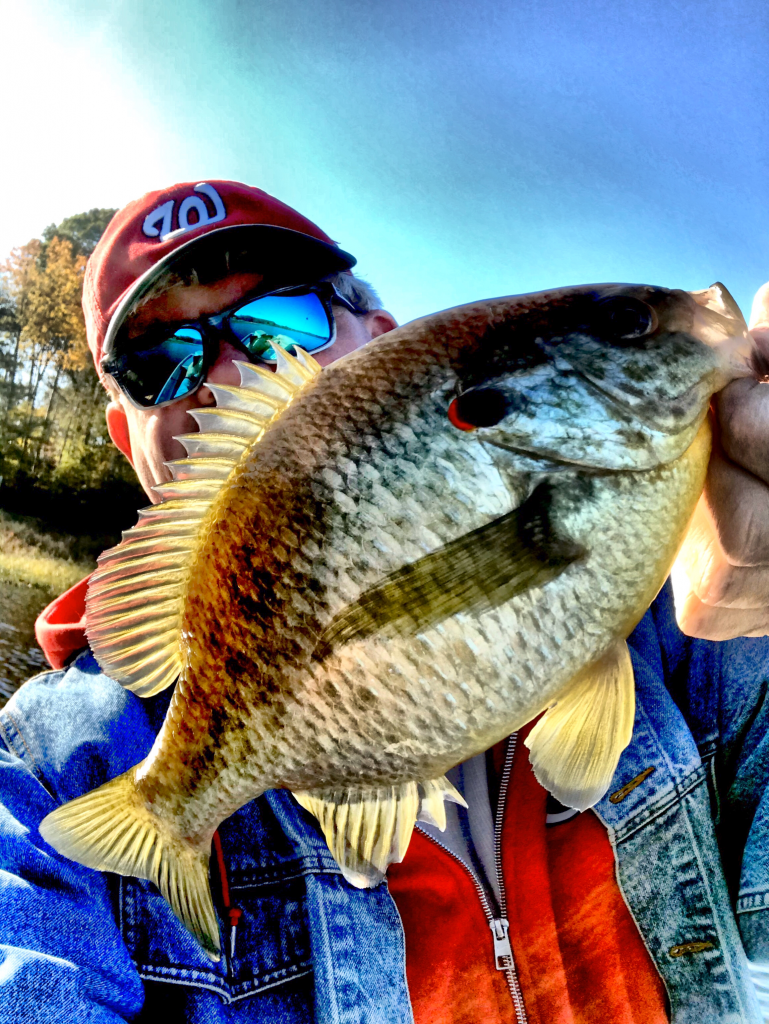
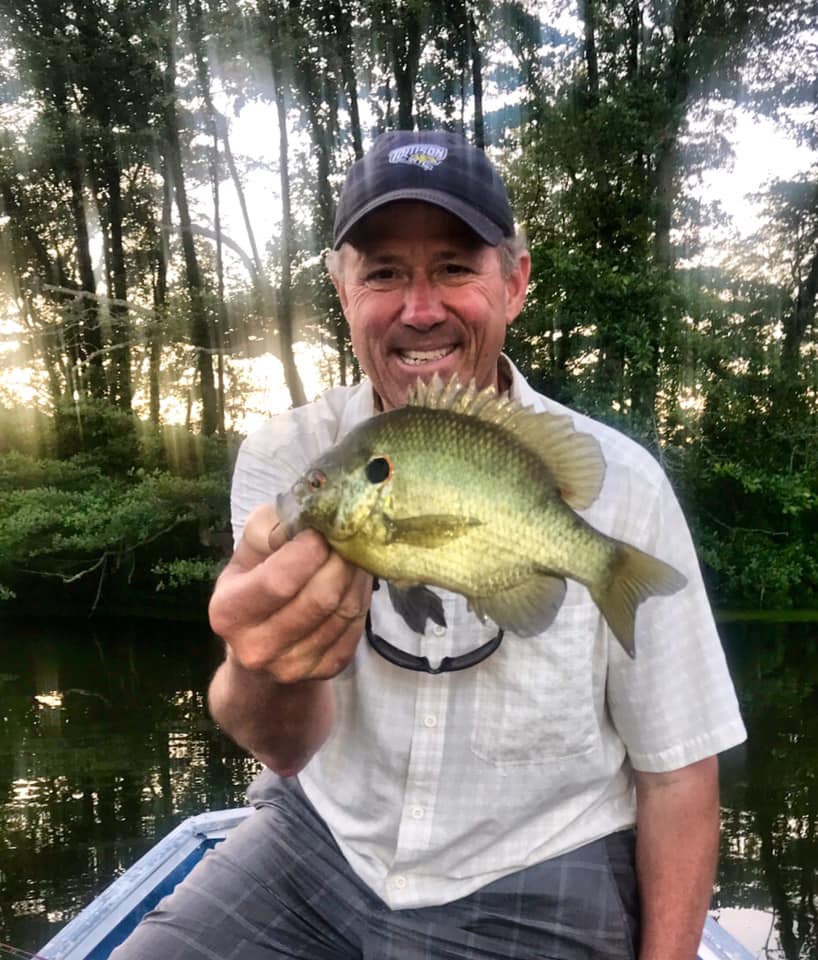
If you do a keyword search for “invasive species” on any Chesapeake Bay-centered social media platform, you’ll most likely see more than you want to know about northern snakeheads. But, there are lesser-known invasives in the Chesapeake watershed, some that aren’t considered harmful and that are even stocked by our state natural resource agencies. I’ll leave it up to the experts to decide when it’s alright to promote a new species or when it’s better to eradicate one, but I can tell you for certain that I’m tickled pink about the rise of the redear sunfish.
Redear sunfish (Lepomis microlophus), also known as shellcrackers, are one of my all-time favorite fish. Some of my fondest fishing memories are of catching burlap sacks full of shellcrackers with my brothers and our father. Originally considered a strictly southern species, they’ve been helped along by selective stocking while naturally expanding their range north. In 1938, they were reported to be no farther north than Georgia but by 2011, they had made their way up to the Potomac River tributaries. In the past five years, I’ve caught them in many Eastern Shore tidal streams and in every DNR-managed lake that I’ve fished. Shellcrackers do great in this area because of their high tolerance for salinity and their taste for small snails and other mollusks. Today, the shellcracker populations in our tidal streams and millponds are booming.
Read More!
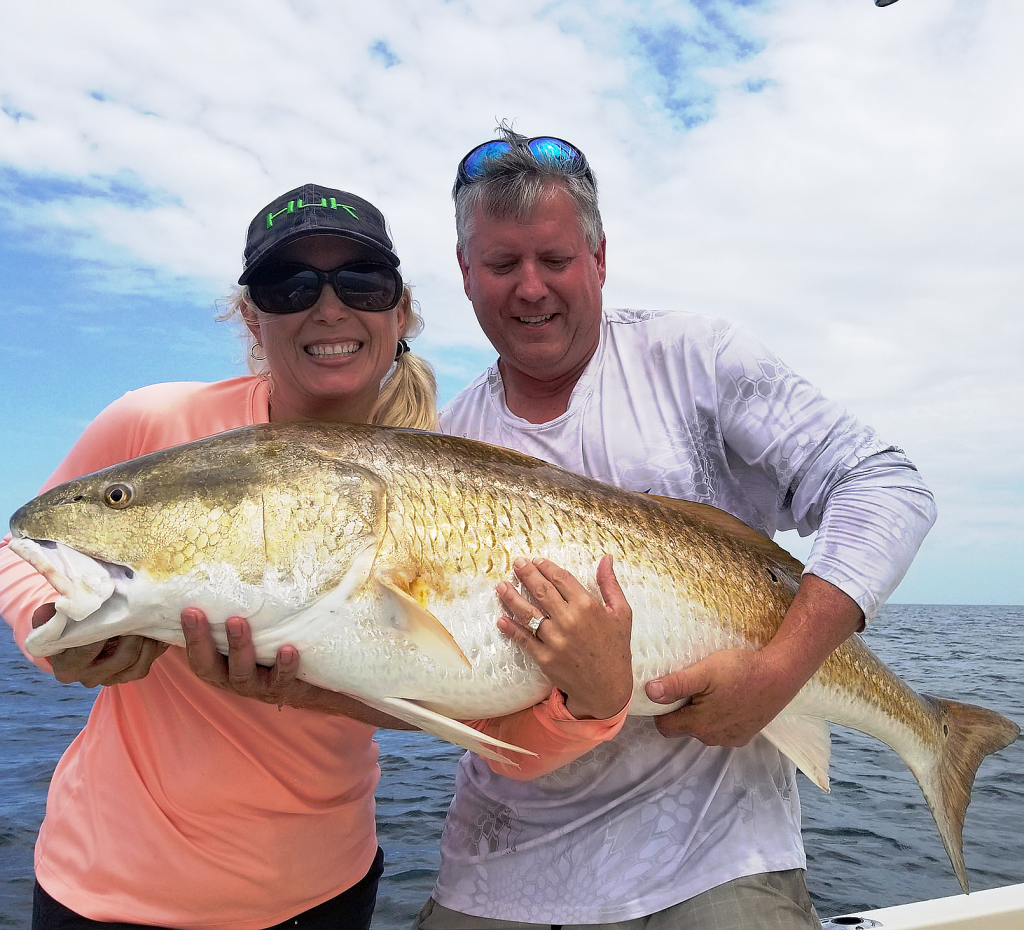
As the Chesapeake summer slowly slips into fall, many anglers are looking forward to the upcoming rockfish run. But don’t wave goodbye to summer fishing patterns just yet. Unless you’ve been hiding under a bridge, you’ve probably heard about the incredible bull red drum catches south of Poplar Island. We seem to get more redfish every year in Maryland, and this has been the best season in recent memory.
At one time redfish, or channel bass as they are sometimes called, were so prolific that anglers caught them by the boatloads. Fishing pressure increased every year until the early-1980s when stock assessments showed big problems. Regulators stepped in and eventually declared a complete moratorium on the harvest of redfish greater than 27 inches on the East Coast. It is taking the species a long time to recover. Red drum have an estimated 30 year lifespan and some can live up to 60 years. Removing any spawning-age fish from the overall population has implications. Bigger and older fish can drop as many as forty-million eggs per season. That’s ten times as many eggs as younger ones. Killing a single bull red can impact the health of the species.
Read More!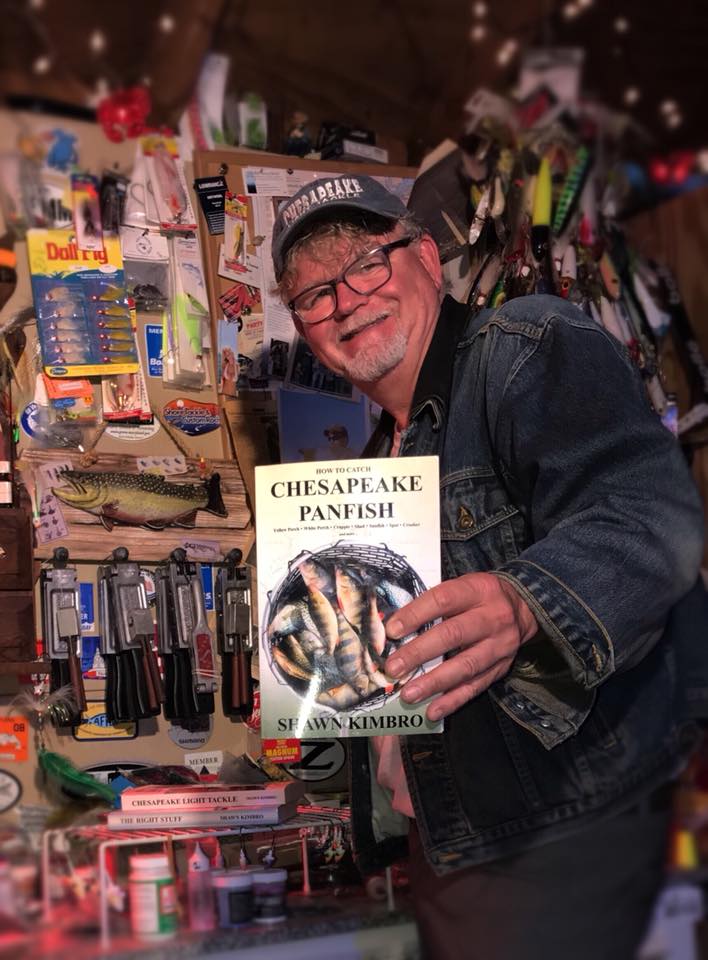 UPDATE 10/7/2018: Books have arrived and we are now shipping!
Good news! My new book is now available for pre-order. You can select either a limited edition hard cover or a first edition soft cover by clicking on the book pictures on the right side of this page. We expect books to arrive anytime and we will begin shipping as soon as we get them. All pre-ordered books are guaranteed to arrive before the official release date of October 15, 2018. After October 15, books will also be available in tackle shops in both Maryland and Virginia, at Amazon.com, and at other online outlets such as JigTheBay.com. Both the hard cover and soft cover contains 340 pages of which 43 are printed in color. There are over 100 photos and illustrations. Soft covers are $24.95 + shipping and hard covers are $39.95.
From the back cover:
Whether you fish from a boat, kayak, or the bank, there is nothing more fun than catching panfish in the Chesapeake Bay. Digging deep into his bag of panfishing tricks, lifelong angler Shawn Kimbro lays out the best year-round strategies for catching perch, crappie, bluegill, shad, and other species in the tidal waters of the Chesapeake Bay. Featuring the locations of prime fishing spots in Maryland and Virginia along with the history of some of the region’s most popular lures, you’ll find details about the best baits, rigs, lines, rods, reels, and other tackle. Enhanced with entertaining fish tales and illustrated by Eva Nichols’ artful sketches, this book is perfect for both beginning anglers and seasoned panfish pros.
I’m super excited about this new release and very happy to have the opportunity to share my knowledge and research with you my friends and fellow anglers. I hope you enjoy reading it as much as I loved writing it. I look forward to seeing you on the creeks and rivers this fall and winter!
–Shawn
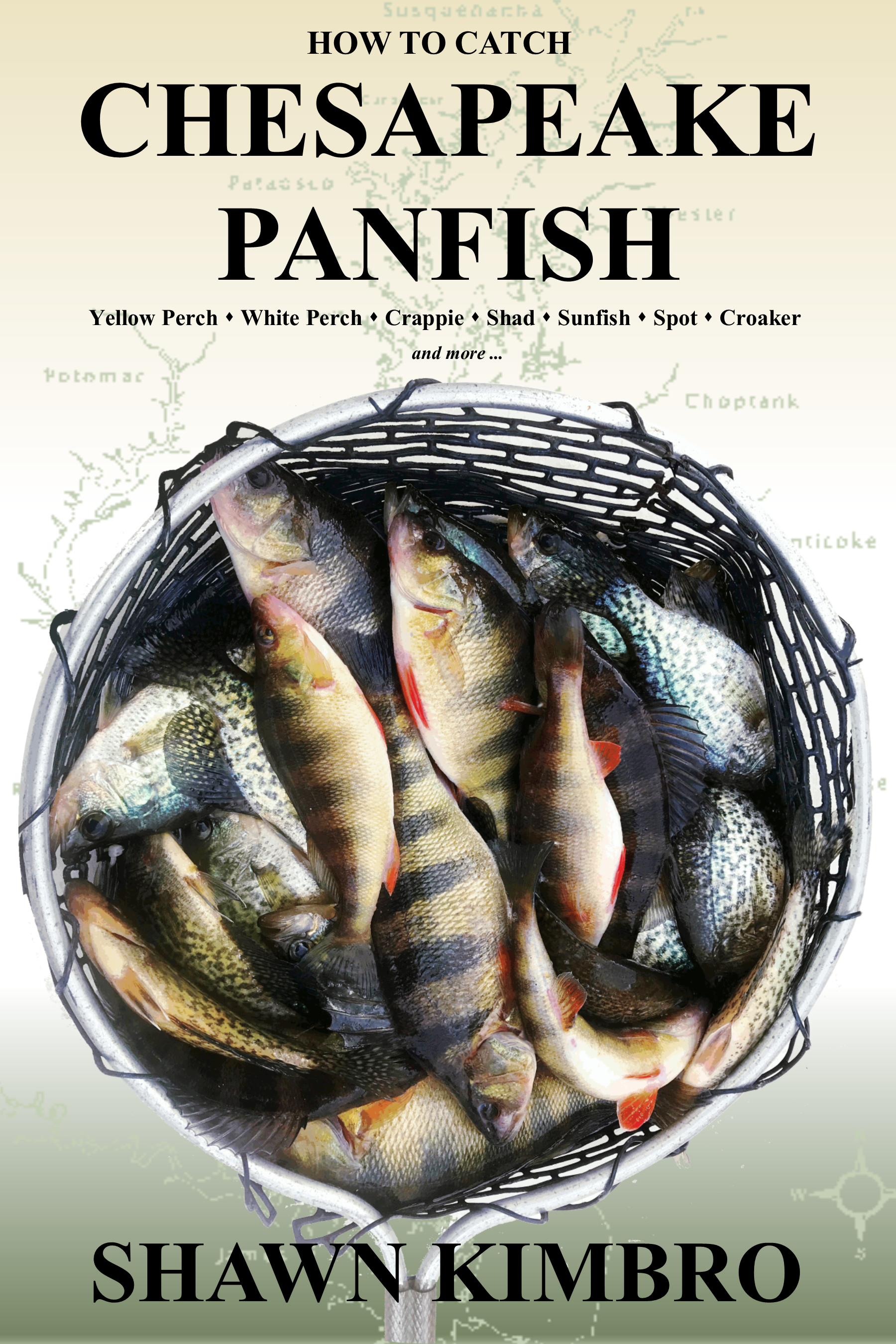 I’m happy to announce that we are on schedule for a September release of my new book, How To Catch Chesapeake Bay Panfish. I’ve been writing for this project for a couple of years and I’ve been researching it my entire life. It has been great fun lining out tips and tricks and sharing information including lots of original fishing stories. It’s a book I’ve always wanted to write. I’ll tell you more about it as we get closer to the release date, but for now, I want to share some recent material from my social media pages.
The second week of June is Chesapeake Bay Awareness Week. It’s a time for those of us who live in the Chesapeake Watershed to reflect on all the connections we have to the Bay and think about how it affects our everyday lives. This year, the Alliance for the Chesapeake Bay has participated in a series of social media releases highlighting individual regions and river systems. I thought it might be fun to share those posts on Facebook and add some snippets of my own as they relate to fishing. All of my observations are condensed from the pages of my upcoming book and I’ll have much more to say about each one. Click on the thumbnails if you want to enlarge the posts and read the captions. If you have something to add and want to participate in the discussion, join me on my Facebook page. Stay tuned for more details about my book along with an announcement about some upcoming events we have planned that we hope will help bring together sportsmen and women from all around the Watershed to work toward better fishing. Let’s fish!
 I quit rockfish. Yes I did. Well, at least for a while. I haven’t fished for striped bass since December 6, 2017. That was the day we landed three huge stripers including a 50-incher just below Poplar Island. It seemed like a good stopping point.
Now, don’t get me wrong, I haven’t quit fishing, nor have I given up rockfish for good. In fact, I’ll be back on them next week. I just decided to spend the winter/spring of 2017-2018 fishing for perch, crappie, and shad.
You know what? I’ve had a blast!
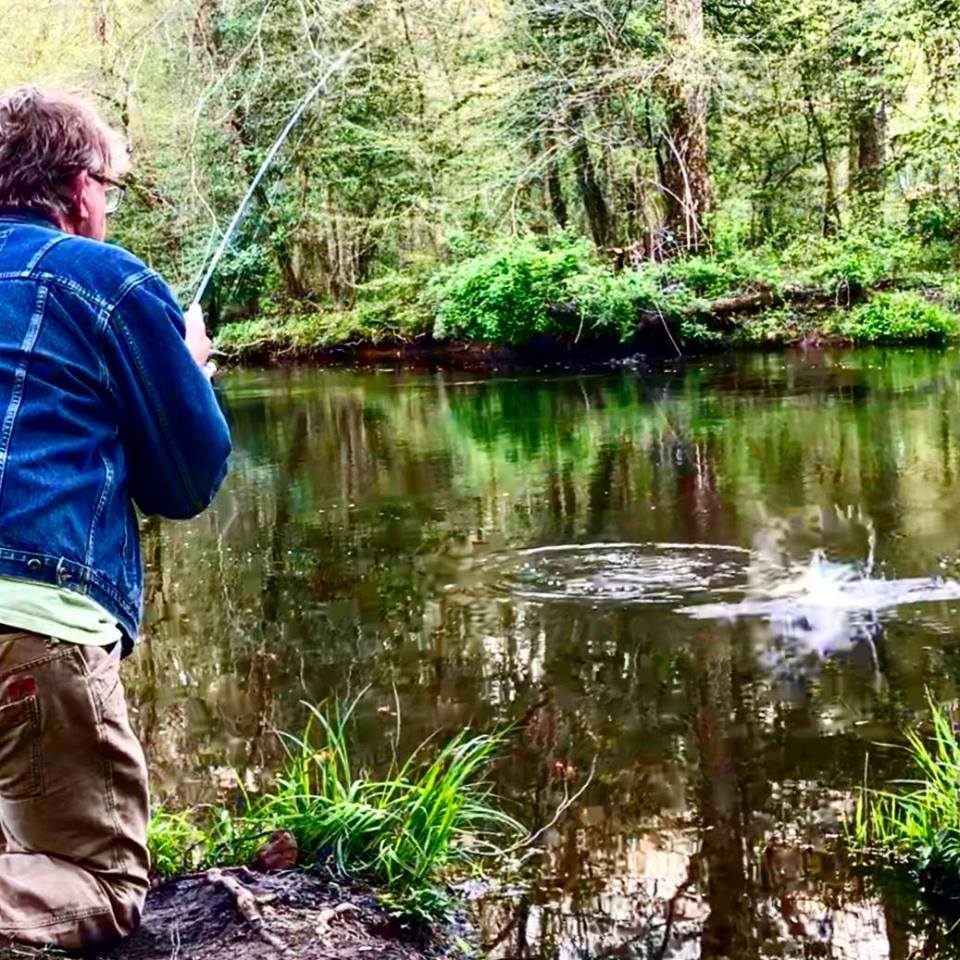
I can’t resist the call of the creeks. I dearly love striper fishing, but the hours I’ve put in polishing my rockfish techniques add up to only a fraction of the time I’ve spent in my life-long pursuit of panfish. They are my first love. After over fifty years of fishing, my favorite fish remain bluegill, crappie, perch, and shad.
The longer I live and the more I fish, the more I long for simplicity. To me, panfishing is therapy; a welcome counter to the competitive and frequently fast-paced world of run-and-gun striper fishing. I can stand on the creek bank for hours casting for perch or crappie. It makes me feel like I’m connected to nature, not only as an observer, but as a participant. When I’m panfishing, I never think I’m wasting a minute. In return, panfishing has enhanced my striper fishing skills. The pursuit of perch has made me a better rockfisherman.
