Click the Book Covers Below to Buy the Books

Recommendations




light tackle
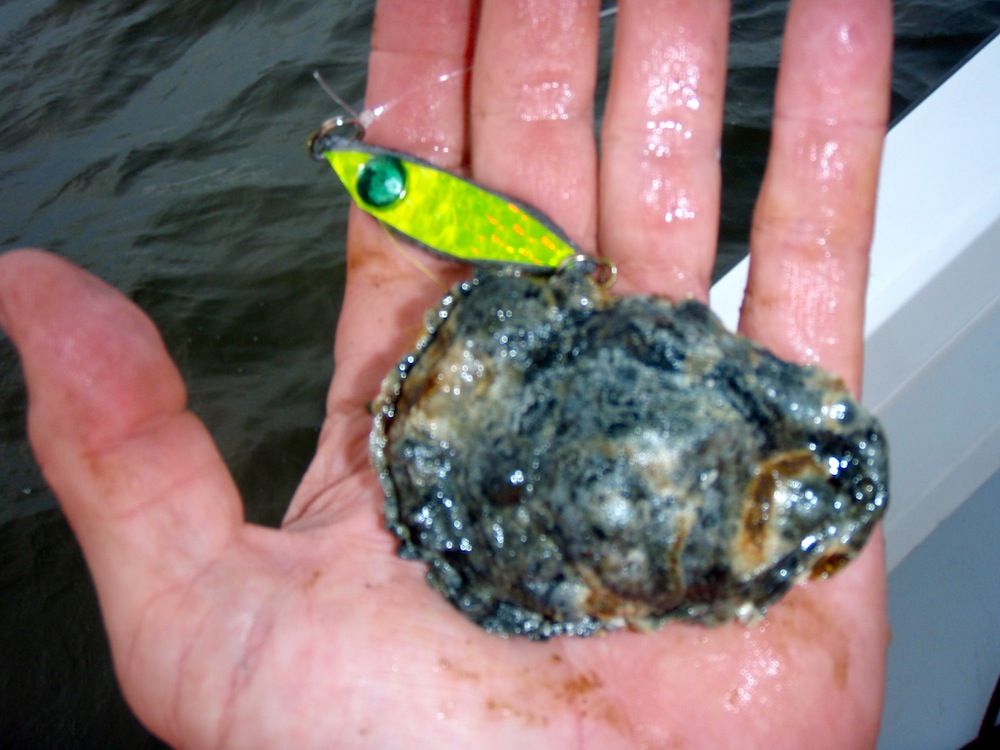 It’s not that hard, right? You just open your mouth, close your eyes, and throw it back. At least that’s how a lot of people eat oysters. I wonder if they really like them, or just the idea of eating them? I consider myself something of an oysterholic. There’s only so long I can go without eating some. I like them just about every way you can prepare them, but especially raw. I have several friends who are also oysterholics. Since our problem is more than we can handle, we’ve developed a twelve-step-program. Thank goodness they sell oysters by the dozen!
I remember the first oyster I ever tried. It was spring break of my freshman year in college. I visited a friend who lived on a boat along the Florida coast. We were broke and hungry so he showed me how to wade out and catch oysters from the Apalachicola Bay. We shucked them with a screwdriver and ate them on the spot. They were delicious. I’ve since refined my techniques for finding and eating oysters, but I’ll never forget the first time. Read More!
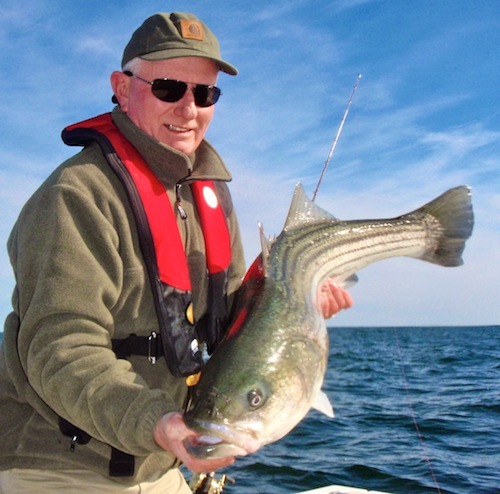 Last December, I caught up with my friend Gaylon Thompson at one of my light tackle seminars in Severna Park, Maryland. During the few minutes we had to talk, we wondered if we might be able to get in a fishing trip in early 2012. I was very excited when Rich Jenkins called me last week to say he and Gaylon were heading down to Virginia to fish in the ocean Monday, and I was invited. He also invited Jamie Clough. We’ve been hearing about the coastline bite for a while now from Wild Bill and other fishermen who follow the migration. Even though I’m turning up a few hard-to-catch but very big fish here in the Bay, we couldn’t resist giving it a go. Our first challenge was deciding whether to fish the Chesapeake Bay Bridge Tunnel, or the ocean. We called, emailed, and Facebooked everyone we could think of seeking advice. Some of our friends came though, especially “Hillbilly Boater” Jack, and a couple of Jamie’s buddies. I also got some good info from some of Tattoo Charlie’s buds on Facebook. Read More!
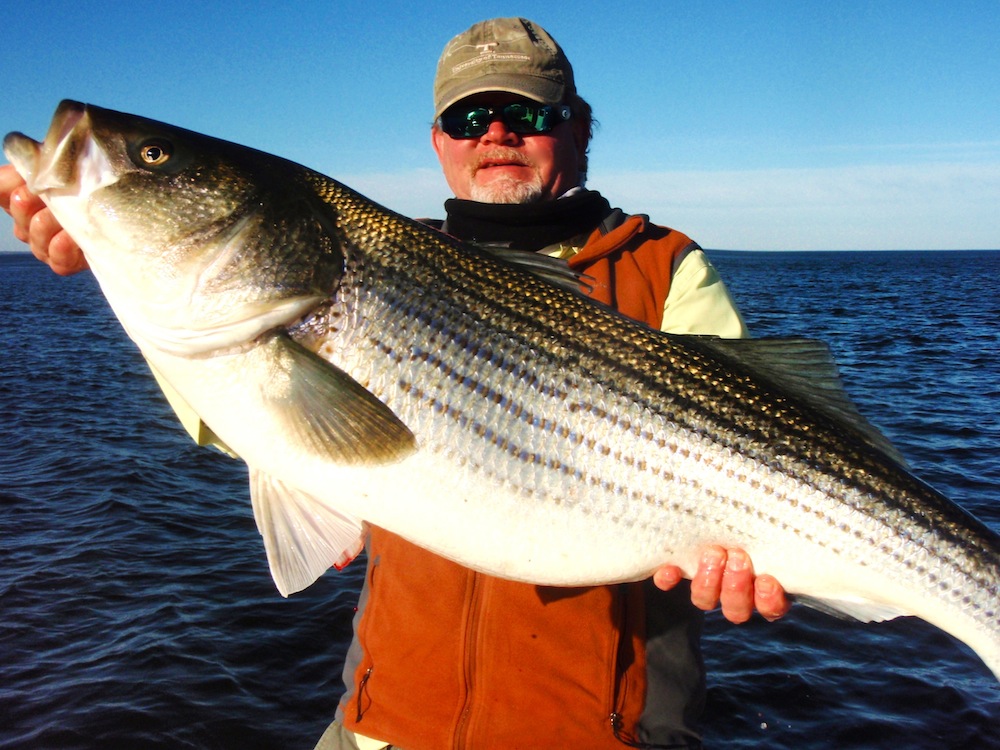 If the next 51 weeks of 2012 go as well as the first one, this promises to be a very good year for light tackle fishing on the Chesapeake Bay. I’ve fished four times and caught a Diamond Jim qualifying citation fish on each trip including three rockfish in the mid 40-inch range. I’m chalking it up to a little experience, some insider information, and a lot of luck. My son, “Big Fish Cory” has been visiting. Although he didn’t catch any trophies this time around, he still brought along his lucky horseshoe. Chesapeake striped bass fishermen have two basic winter options. One is to fish deep holes – either in the main stem of the Bay or up in the outside bends of the rivers – and the other is to work the warm water discharges. Since we’ve had a very mild winter so far, the warm water discharges have been inconsistent. I decided to split the difference and fish the last four days close to home off Kent Island.
One of the best places I know of to jig up deep water rockfish is the Bay Bridge. Two- and three-year-old-stripers and white perch survive the cold winter by stacking up around the Bay Bridge rock piles. They’ll stay there until the spring freshet washes out their warm water comfort zones. Even though they are readily apparent on a fish finder, they aren’t always easy to catch. To coax a strike out of deep-water stripers you just have to aggravate them until they bite. You can jig for hours and not get a single strike, then, snap – the fish will turn on and you’re catching every cast. Read More!
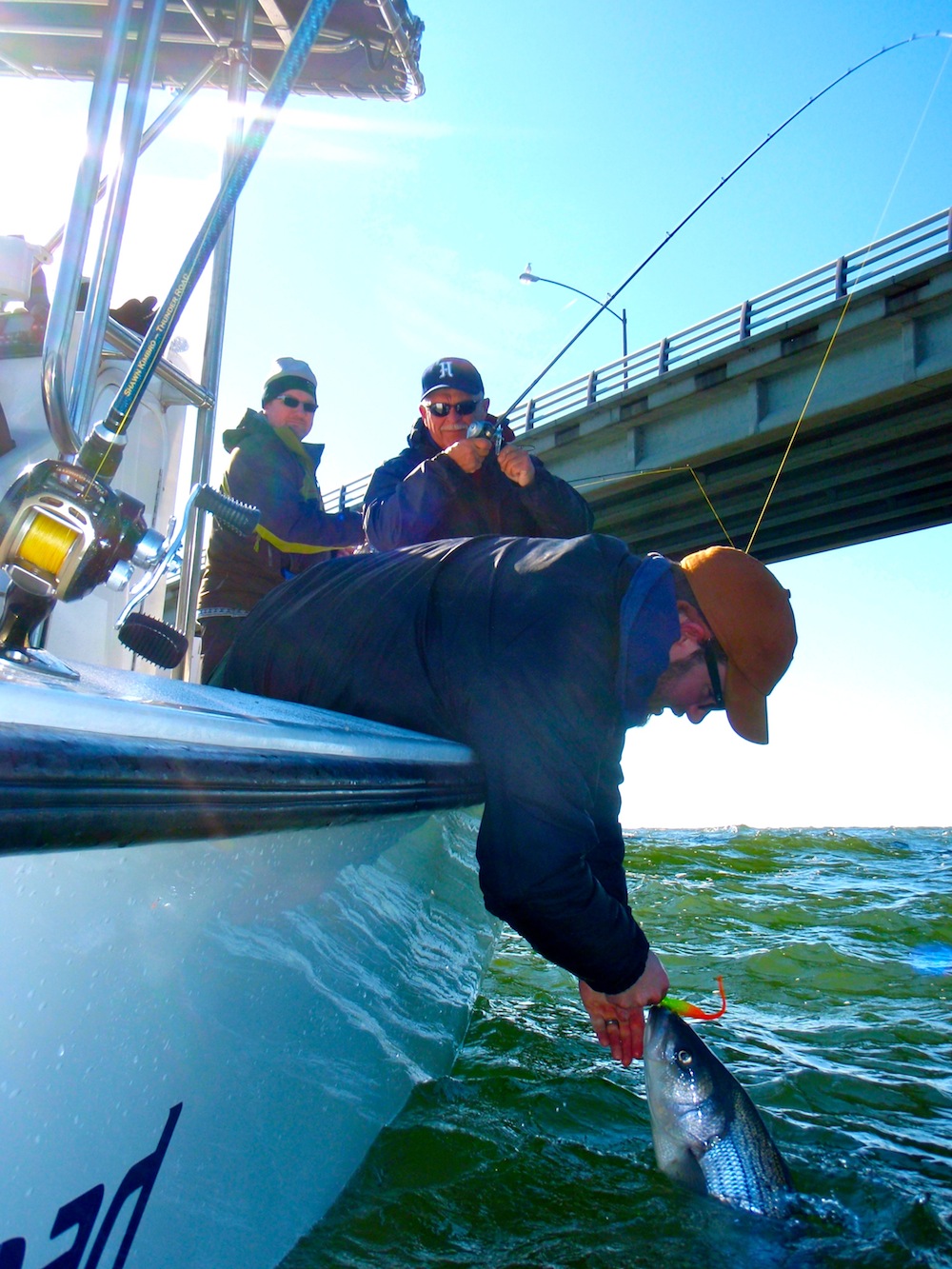 I’ve just spent an extra long, extra fun weekend at the Chesapeake Bay Bridge Tunnel (CBBT). Connecting the Delmarva Peninsula with Norfolk and Virginia Beach, the CBBT is 23 miles of high-current structure that is prime habitat for striped bass. Rich Jenkins and I trailered my Judge 27 center console Thunder Road down Rt 13 to Cape Charles late last Friday. My son Daniel and my brother-in-law Mitch flew into Norfolk to meet us. We had a great time and found some fine fishing.
In Decembers past I’ve stayed at hotels in the Kiptopeke area but this time I decided to look into renting a vacation home for our four night stay. After calling and emailing several places, I settled on a house in historic Cape Charles called “Southern Comfort on the Bay.” A recently remodeled Victorian with three bedrooms, two baths, a kitchen, game room, washer and dryer and a driveway large enough to park my boat in, it was the perfect base for our five days of fishing. It’s very nice to come off the water and have a roomy place to kick back, dry our clothes, watch football, play cards, and enjoy good food and drink. Better still was the price. I’ve paid more for a single hotel room. Read More!
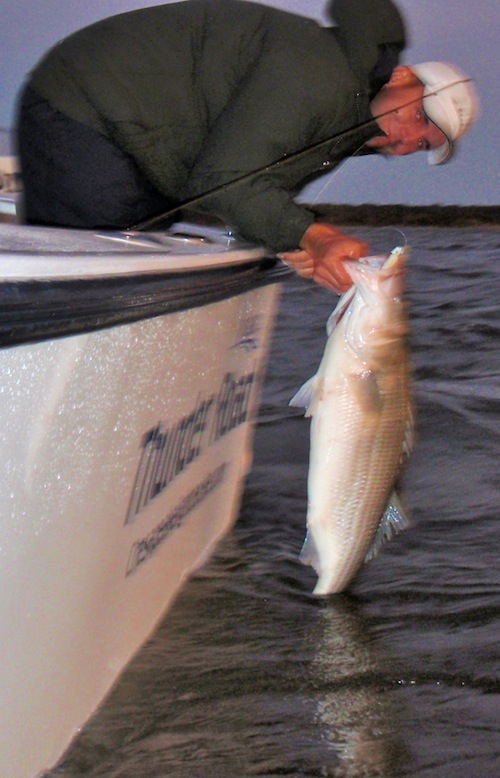 Since I’ve reported bigger fish on recent trips, I’ve been overwhelmed with questions from fishermen who want to know where the fish are. The big fish are moving around very quickly and they are rarely at the same place twice. Even on days when I find them right back where I left them, they’ve been very wary and hard to catch. It’s been a challenging season, but if you look at my mid-October fishing reports from last year, you’ll see that the pattern is nearly the same. I think we sometimes put too much emphasis on locations, and not enough on patterns. Tell someone where to go to catch a fish and you may help them for a day, but teach them how to identify specific patterns in how fish behave, and you’ve helped them for a lifetime. Ask any accomplished fisherman the secret to repeated success and he’ll tell you it’s the ability to identify specific feeding patterns. I believe that you can drop a good fisherman into any body of water in the world and he’ll catch fish as long as you give him enough time to recognize the prevailing pattern. It’s especially important on the Chesapeake where circumstances change quickly and rapid drops in water temperature are not unusual in October. I think fishing conditions shift faster and more often here than anywhere I’ve fished before. Fortunately, fish are creatures of habit and there are distinct patterns to their behavior.
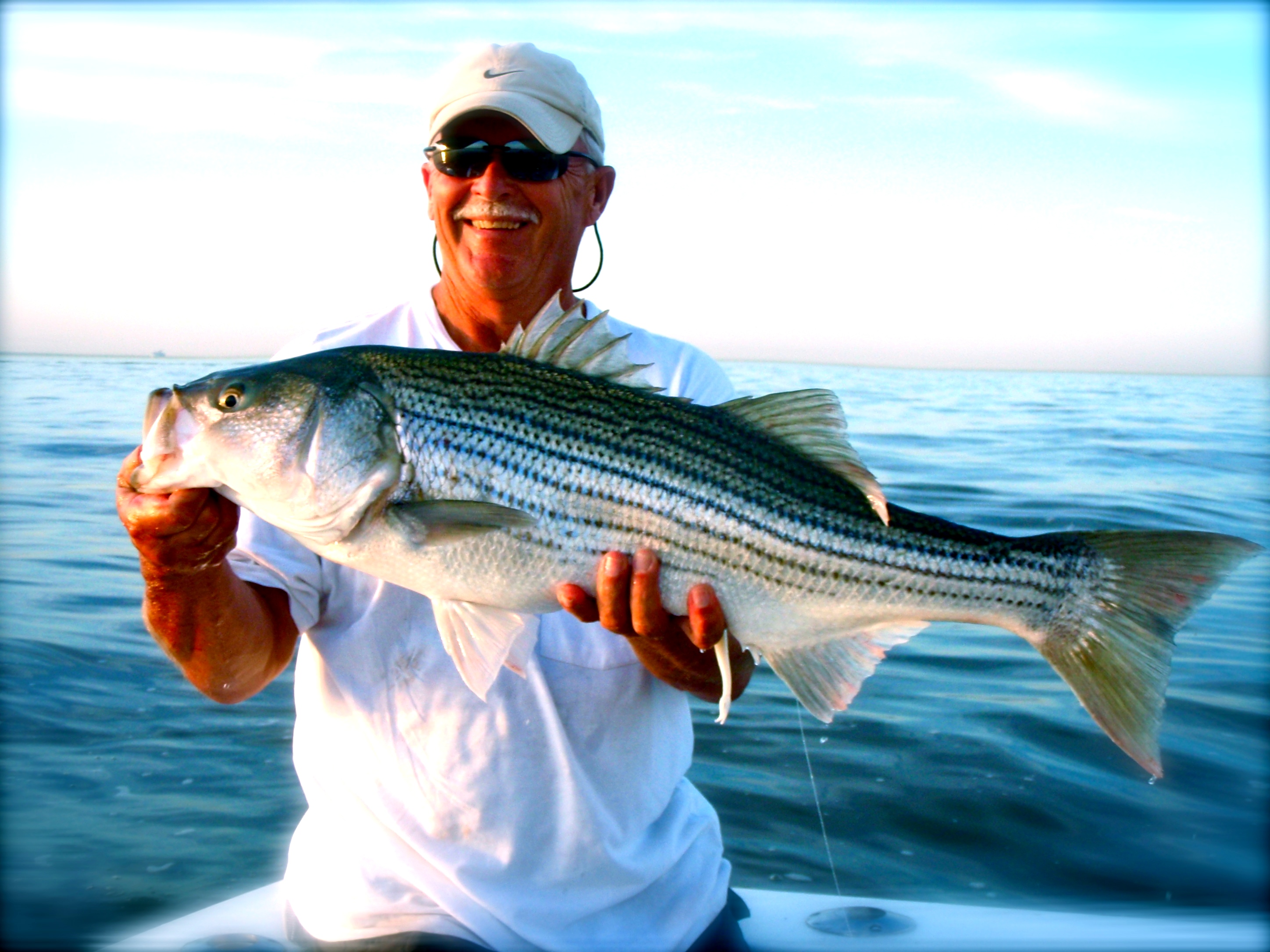 The good news is that those migratory fish I talked about last week – you know, the ones that sneak in through the C&D canal every October – well, they’re here. Since last Tuesday, reports of big, clean fish with sea lice have been flooding in. The bad news is that the Upper Chesapeake Bay is still so murky that those big stripers are moving quickly down the channel searching for cleaner water and more plentiful bait fish. They haven’t gone too far south, but they have bypassed the northern humps and ledges where we’ve found them in years past. The ugly part is that, since those fish showed up in some very accessible high-traffic areas, word got out quickly and a bite that traditionally lasts until the end of October shut down in just a few days. At the end of last week, fishing was very good, but soon hoards of inexperienced fishermen, some with screaming kids, running engines, and blaring radios, descended on an area that is shorter and narrower than a football field. That caused the fish to hunker down and become very difficult to catch. Difficult, but not impossible. It’s been a tough week, but there are trophy stripers in our area right now, and fishing is sure to improve as more and more migratory fish enter the Chesapeake.
