Click the Book Covers Below to Buy the Books

Recommendations




water temperature
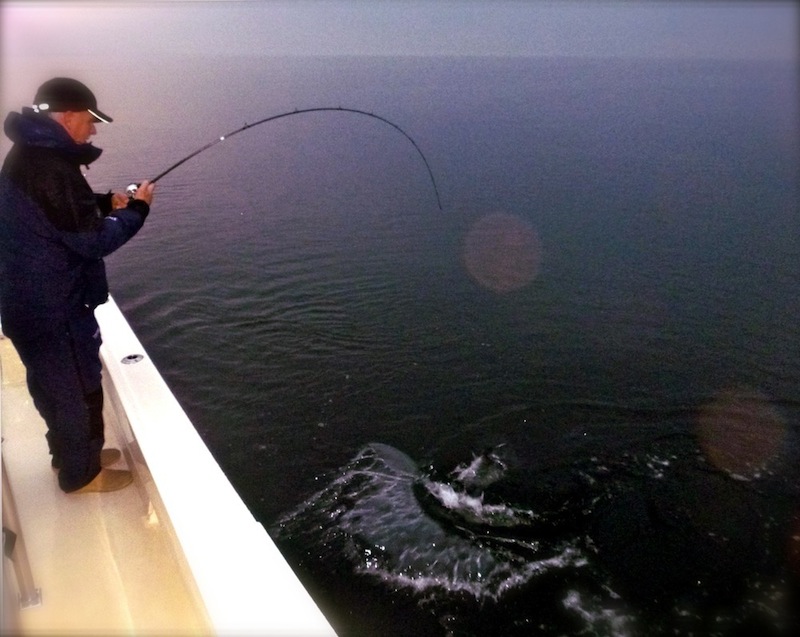 It’s January on the Chesapeake Bay. It’s freezing. It’s windy. It’s snowy-sleety-foggy-and-rainy-miserable. It’s a fine time to stay home in front of a comfortable fire and dream of warmer seasons. On the other hand, these are perfect conditions to catch & release trophy striped bass in Maryland. To get ’em, you gotta want ’em. And I mean, really want ’em.
When it comes to winter fishing, you have to be motivated enough to put up with some misery. One of the definitions for dedication in Webster’s Online Dictionary is, a solemn commitment of your life or your time to some cherished purpose or goal. Everyone I know who is good at anything got that way because of their dedication. Simply put, the key to success in any endeavor is an extreme level of commitment. Now, let’s talk rockfish.
It’s miserable out there. It’s striped bass weather. If catching and releasing big fish is your cherished goal, why aren’t you fishing?
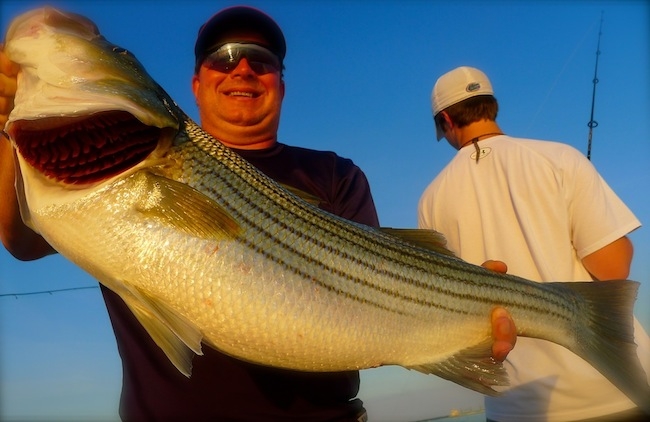 “I got eelgrass veins and brackish blood, I wrote my name in the tidal mud.” Daniel Kimbro from the song “Cape Charles.”
Eelgrass – it’s not something we’re used to seeing much in the Maryland portion of the Chesapeake Bay. According to the Maryland DNR website, it’s most likely found in high salinity areas of the Chesapeake Bay, approximately from the Choptank River south to the Atlantic Ocean at Cape Charles and in the smaller 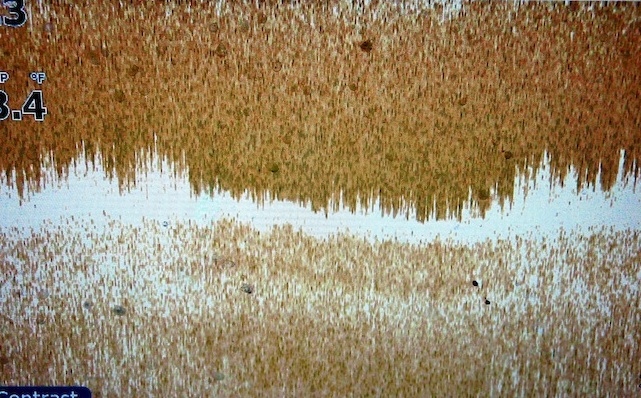 coastal bays. Because of poor water quality, bay grasses are at historically low levels, so it’s a little odd that we’re seeing eelgrass farther north than usual this summer. It’s probably a result of high salinity coupled with sustained warmer temperatures – we’ve just come through the warmest twelve consecutive months ever recorded in the United States. On my StructureScan sonar, eelgrass and its cousin wild celery grass, looks like underwater fields of waving amber grain. Baitfish hide in it, and rockfish love it.
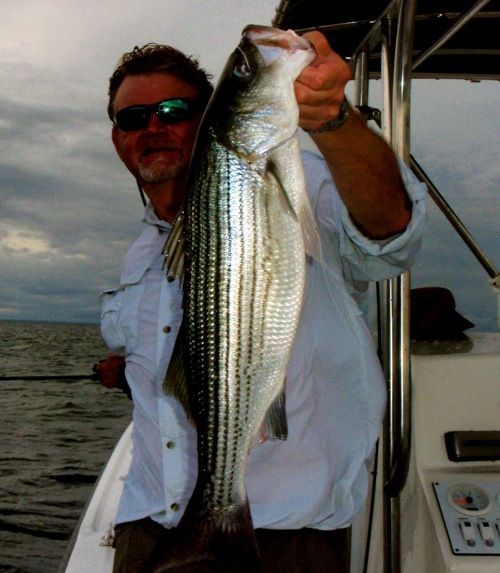 We’ve enjoyed a pretty good spring of light-tackle fishing on the Chesapeake Bay. Water temperatures warmed early, then leveled off through the end of April into May. Top-water casting is good right now at some places. Some anglers are even sight-casting surface lures and flies to cruising fish on shallow oyster bars near the mouths of the rivers. The water in some parts of the Upper Bay is clearer than I’ve ever seen it. While that makes surface fishing enjoyable, it also makes jigging tough since it’s easier for stripers to distinguish the difference between our lures and baitfish. The clear water looks nice, but there’s a big problem lurking below the surface: Low dissolved oxygen (DO). Measured in milligrams per litre, dissolved oxygen levels were recorded at 1.04 on the bottom beneath the Bay Bridge in April. That’s lower than they’ve been in twenty-five years. Look out for big algae blooms coming soon. Salinity also peaked to record levels in April. Last spring, Bay Bridge salinity was 4.20 ppt. This year, it’s more than twice that at 10.50 ppt. DO levels are also low in Eastern Bay, although salinity there is closer to normal. What does this mean for the fishing? Read More!
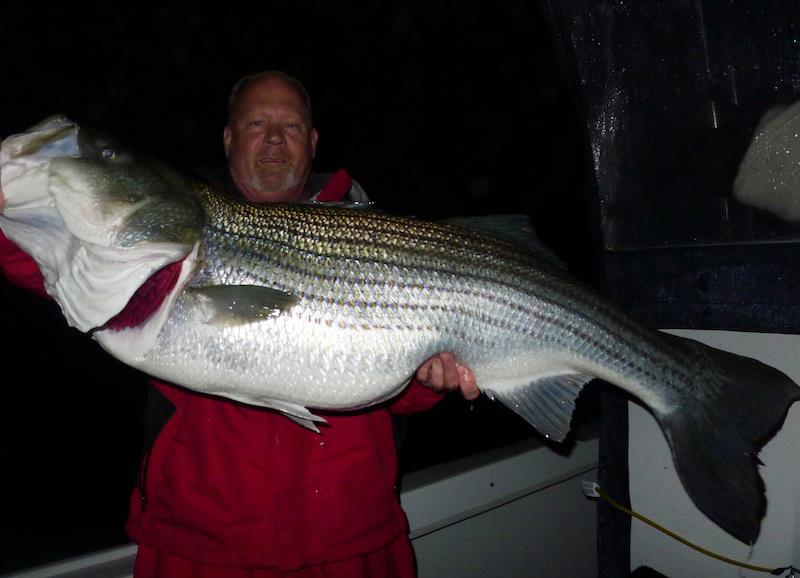 The third in a series of entries about the senses striped bass use to find their prey, here’s a look at how we can trigger more strikes by understanding how stripers hear and feel. It’s no secret that fish can be either attracted or repelled by sound. One of the biggest mistakes I see from rookie Chesapeake Bay fishermen is making too much noise. Every hunter knows the importance of stealth. When I was a kid, my dad taught me to walk lightly in the woods and to avoid stepping on sticks or limbs that might crack. He also showed me how to control a cough or sneeze and advised me to regulate my breathing in order to be more stealthy. Later, I sat through U. S. Army basic training and NCO academy classes stressing the importance of noise discipline in combat. Avoiding excessive noise when you’re fishing seems like common sense, but I’m always amazed when I see a boatload of fishermen roar up on a fishing spot, laughing and shouting with radio blaring and engine running.
Obviously, stripers can be put off by noise, but they can be attracted by the sounds they’ve learned to associate with food. To a casual observer, it might seem like a quiet world beneath the water, but it’s really a noisy environment: Drumfish drum, croakers croak, baitfish bolt, crustaceans click, even crawling crabs contribute to the convoluted cacophony of sound. Striped bass hear low-pitched subaquatic sounds better than humans. They have an auditory range that starts on the low end at 15 sound waves per second (Hz) and tops out on the high side at about 15,000 Hz. Humans can’t hear sounds much lower than 20 Hz, but we can usually hear high pitched sounds better than rockfish. The angler’s challenge is to amplify the sounds that trigger strikes, while masking the ones that send fish packing. Read More!
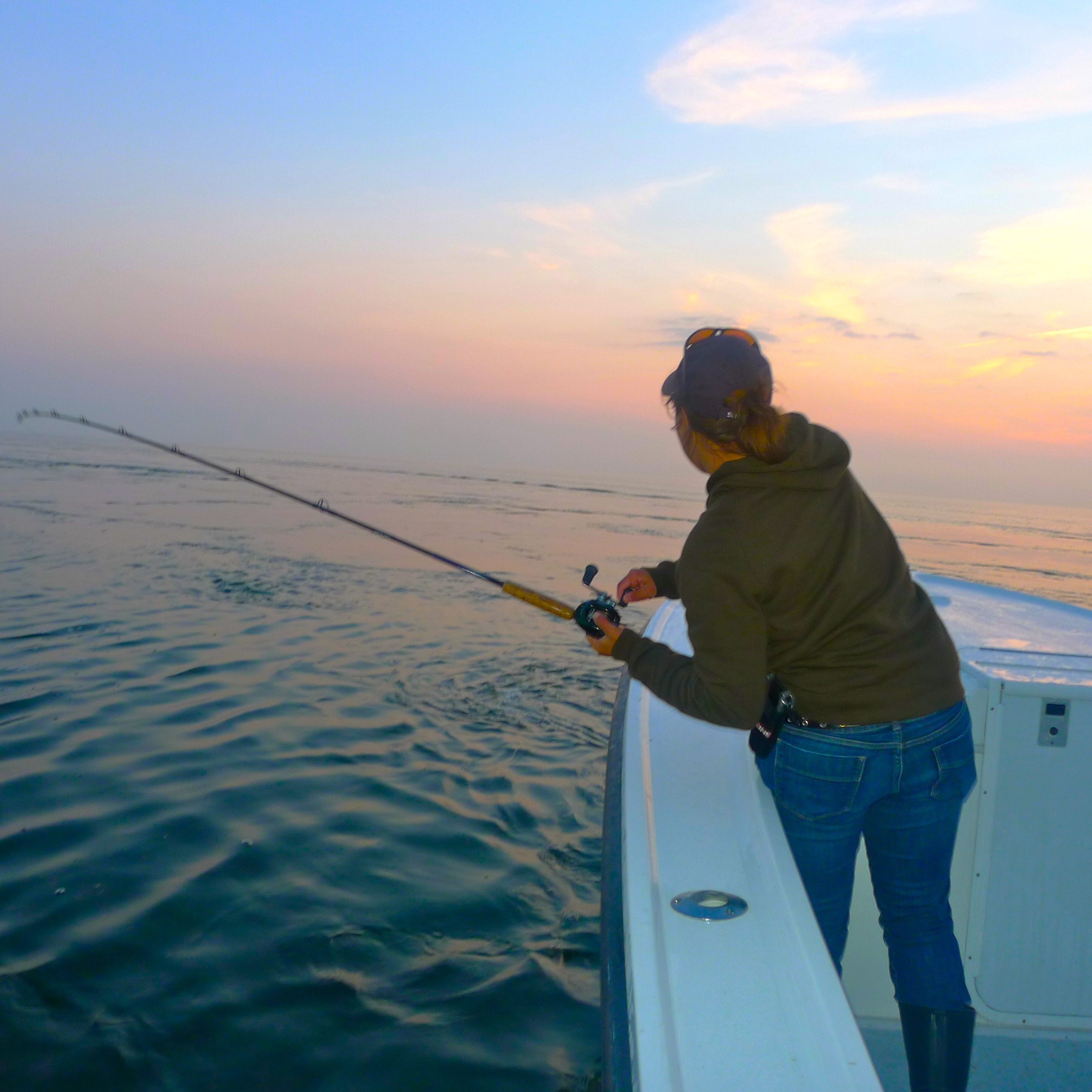 In the last CLT entry, I wrote about the five reasons why Chesapeake Bay stripers attack a lure: hunger, reaction, competition, territory protection, and curiosity. When fish are hungry, they’re easy to catch. Almost any lure or technique will work on hunger-feeding fish. Unfortunately, most of us don’t have the time or resources to constantly run around looking for schools of voracious fish. If you’re like me, you have to fish in the limited time you have available, and you probably stay close to home. While we may occasionally happen upon groups of ravenous fish, most of the stripers we encounter are hard to catch. In order to be consistently successful, we have to provoke strikes from fish that may not be particularly inclined to bite. Strike producing lures are especially important right now since we have trophy rockfish migrating in and out of the Bay. Our chances for catching-and-releasing a 50-pounder on light tackle are better than at any other time of year, but migrating fish have other things on their minds besides eating. Big fish get bigger by being smart and getting smarter. To catch them, we need to cast lures that will provoke strikes by appealing to their five senses; sight, sound, smell, feel and taste. I call the formula 5 by 5. By that, I mean we can consider the five reasons why fish strike, then use lures designed to appeal to each of their five senses in order to come up with the best of all possible strike triggers. In this installment we’ll look at striped bass eyesight. Read More!
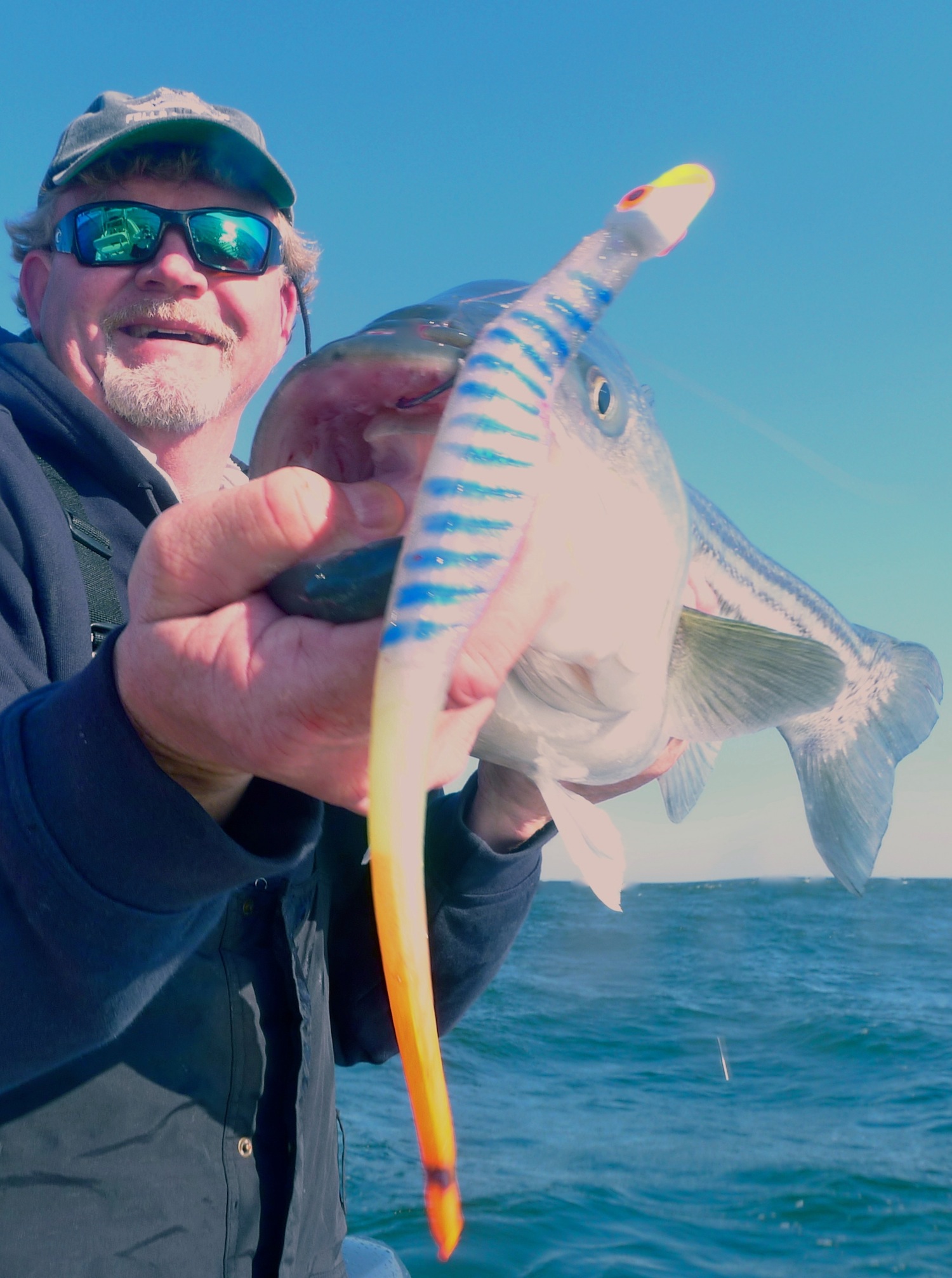 Along with sneaking in a couple of catch-and-release fishing trips, I’ve been reading all I can lately about why we catch fish with ease on some days, and why we cant buy a bite at other times. I can’t say I’ve solved that mystery, but I’ve included most of the knowledge I’ve gained in a PowerPoint slide show that I will present over the next couple of months to area fishing clubs. If you attended the Annapolis Saltwater Fishing Expo last weekend, you’ve already seen this show, but don’t be surprised if it morphs into a somewhat different format as I present it to different groups and organizations. I learn more every time I talk to fellow fishermen, pick up a book, read a magazine article, look at a website, and (especially) when I go fishing. Here’s a sneak preview of my Strike Triggers presentation:
Have you noticed that some fishermen seem to steadily catch big fish and regularly have successful days even when others don’t? What are they doing differently? In my opinion, one trait of consistently productive fishermen is an appreciation for the concept of strike triggers. They may not always call it that, but you can pretty well bet that good fishermen are incorporating techniques in their lures and lure presentations that trick fish into biting even when they’re not particularly inclined to eat. It starts with a good understanding of the five reasons why striped bass attack a lure. Read More!
